A lot of students struggle year in year out to pass Jamb exams. The mention of the word JAMB alone gives some students the jitters because they believe that it’s an examination that is difficult....
A lot of students
struggle year in year out to pass Jamb exams. The mention of the word JAMB
alone gives some students the jitters because they believe that it’s an
examination that is difficult, if not completely impossible to pass by the
average student.Some students who
eventually manage to pass JAMB have to struggle with another round of
qualifying examinations – POST UTME, before they can now fully gain admission
into universities or polytechnics of their choice.
A
lot of students would rather avoid all of the stress and opt for easier ways to
gain admission into the university without having to write JAMB or POST UTME
examinations.
There
are several ways by which you can gain admission into the university without
writing JAMB
The hefty, double-bodied Stratolaunch airplane —
its wingspan of 385 feet (117 meters) is the widest in the world — recently
reached a new milestone that brings it one step closer to leaving the ground.
In runway tests conducted on Sunday (Feb. 25) at
the Mojave Air and Space Port in Mojave, California, Stratolaunch achieved a
taxi speed of 46 mph (74 km/h), according to a tweet
posted on Feb. 26 by Paul Allen, founder of Stratolaunch Systems Corp. and
co-founder of Microsoft.
Stratolaunch, which weighs about 500,000 lbs.
(227,000 kilograms), can carry a payload of up to 550,000 lbs. (250,000 kg).
The massive aircraft will transport rocket launchers and satellites bound for
low Earth orbit, according to the company's website. [Stratolaunch
Test Photos: The World's Largest Plane in Action]
Rocket launches from fixed locations can be delayed or halted by inclement
weather and may face hazards from airborne traffic. But deploying rockets and
satellites from a moving aircraft such as Stratolaunch — which would take off
from a runway and release its payloads from a cruising altitude of about 36,000
feet (11,000 meters) — could reduce the risk of launch cancellations or delays
from bad weather, making access to space "more convenient, reliable and
routine," Stratolaunch representatives said on the company website.
Rocket
launches from fixed locations can be delayed or halted by inclement weather and
may face hazards from airborne traffic. But deploying rockets
Scientists want to power cities with the same
high-energy explosions that power the hearts of stars. This process is called nuclear
fusion, and it results (in stars, at least) in massive amounts of sustainable,
zero-carbon energy.
According to scientists at the Massachusetts
Institute of Technology (MIT), a new $30 million research initiative may make
this long-sought-after energy source a widespread reality on Earth within the
next 15 years.
MIT researchers have teamed up with a new private
company called Commonwealth Fusion Systems (CFS) to carry out a rapid research
project that they say could dramatically accelerate fusion energy technology.
The ultimate goal of the project is to build a compact, fully functional fusion
reactor called a tokamak, which could fit on a truck and produce 100 million
wattsof power, the researchers said in a statement.
But the first step is to create "the world's
most powerful superconducting electromagnets," a key component in building
the reactor. Supported by $30 million in funding from CFS, the MIT team hopes
to finish this first stage of the project within the next three years. [Science
Fact or Fiction? The Plausibility of 10 Sci-Fi Concepts]
"Advances in superconducting magnets have
put fusion energy potentially within reach, offering the prospect of a safe,
carbon-free energy
Benjamin
said (JAMB Official): “We are presently viewing the CCTV to ensure that results are not
released in several batches. On Monday, we will release over 1.3 million
results. These are the results of the CBT centres that have been screened. We
cannot say how many cases of malpractice we have yet, because we are still
viewing the CCTV to discover more cases. “Some strange findings that the CCTV
has showed us include a situation where the CBT owners were collecting money
from UTME candidates and seeing to how they could assist them. Our officials at
the centres raised the alarm but they were also afraid so that their lives
would not be endangered. “What the JAMB officials did was to silently play
along with them, but we were watching everything on the CCTV. We later sent
operatives to the centres and caught them. Such UTME results were completely
cancelled. We knew that there were some innocent candidates in such centres and
we have asked them to go to other CBT centres and rewrite immediately.”
The
JAMB official explained that candidates whose fingers could not be captured
during the biometric verification before the examination would not be allowed
to retake the examination.
What
is Business? Is the commercial dealings that a person or organization has with
another person or organization
1. Work by design, not by
default.
Many
people choose a career with minimal knowledge of what skills are needed, what
the day-to-day work involves, and whether it’ll make them happy. Some start
down one path, pulled toward one of the careers that recruit the hardest, where
corporate profits are highest but employees are least satisfied. Then inertia
and circumstance dictate which direction their career goes. In effect, they let
their career choose them, rather than the reverse. Instead, be proactive.
Decide what direction you want to go, and then start moving in that direction,
today.
2. Take responsibility for your career.
The
days of working at one company for a lifetime and relying on a pension and
social security are long gone. Have an internal locus of control: you are in charge
of your career and your life. Design your own career, because if you don’t,
others will.
Building an online business often means
you’re on your own and starting from scratch — no IT department to set
up your email, no design guru to make a logo, no professional writer to
craft website copy. So most bootstrapped entrepreneurs use their current
resources to get things going, like utilizing a personal email address
and phone number for business interactions.
But once you’re up and running somewhat
smoothly — because let’s face it, you’ll never stop putting out fires,
even if you become a Fortune 500 company — it’s time to start cleaning
up your business and separating the personal from the professional.
A lot of this cleanup means focusing on
branding. Your brand is the look and feel of your business. It is
defined by the elements that set you apart from your competitors. And if
you want to stand out in a crowded market, every little detail counts.
Here are nine quick and easy steps to get from “brand new” to “branded.”
1. Get a dedicated phone number
Having a dedicated number for your business
is a no brainer. It allows you to share your contact details without
giving out your private phone number. It ensures you don’t accidentally
answer a customer’s call with an unprofessional “Yo, what’s up?” Plus
you probably don’t want your customers to hear that five-year-old
voicemail greeting featuring the “Fresh Prince of Bel-Air” theme song.
You can go the old-fashioned route and get a
dedicated cell phone line for your business, but it is probably cheaper
and more convenient to set up a Google Voice number.
In addition to being free, you’ll have a separate number, online
storage of your voicemails and the ability to forward your incoming
calls to any phones that you want.
While
it is possible to run a successful business without a blog, it sure is handy to
have hundreds of potential customers milling around your blog waiting to hear
your witty status updates and see behind-the-scenes photos of your life. While
you’re in the stages of starting up, take a little time each day and devote it
to writing blog posts and getting a wicked-awesome blog designed. Trust me, it comes
in handy. Here’s how:
1.
MAKING CONNECTIONS
Try not to view your
competitors as your evil arch enemies. They‘re just down-to-earth creative
girls like you, on a mission similar to yours! Embrace that. Go out for a
coffee with them, skype them, start a Google + hangout with them and learn from
them. If they are swamped with work one month, they may refer someone they
can’t work with to you. Referrals from friends in the business is a great way
to get work.
2.
MEETING POTENTIAL CLIENTS
Many of my design clients
were my blog readers first. How exactly do you turn a reader into a client?
Self promotion! Let your readers know (but not in a spam kinda way) what you
do, provide them with links to your shop/portfolio and give
Your blog content is the star of the
show, right? Those beautiful photos, helpful tips, quick tutorials… They are
the things you want to draw readers in to and hook them on. So why are you
overshadowing your content with a messy sidebar?
Your sidebar should align with your
blogs goals and priorities. It should look simple and clean instead of
cluttered and confusing!
10 things you don’t need in that
sidebar of yours:
1. A list of blogs you love. It’s nice to support bloggers you love by linking to them,
but the hard truth is that readers will click those links, leave your site, and
most likely forget to return because they’re totally transfixed by the blog
you’ve pointed them to.
2. A section on ‘things you love’, like t-shirts from Target and sunnies from Modcloth.
Unless you’re a fashion blogger who is being paid to promote these items in
your sidebar, you have to ask yourself if it’s really necessary.
3. A mini slideshow of your
Instagram feed. I totally get why people add this
and it does add personality and realness to your blog, to some degree.
But if you don’t use Instagram much, then please remove it from your sidebar.
It distracts readers from more important things, like signing up for your
newsletter or following you in a reader!
4. A never-ending list of
categories. Keep it simple and stick to 5 or 6.
5. A never-ending list of archive
links. If you’ve been blogging for a long
time, then have a drop down archive option to keep your sidebar looking simpler
(and a lot shorter!)
6. Counters. How many people visit your site is of no concern to your
readers, so think about removing counters from your sidebar and keeping up with
stats through Google Analytic instead.
7. A disclaimer. I personally prefer to put disclaimers in the blog footer
and keep the extra sidebar space for more useful things, like follow buttons or
social media buttons!
8. A social media plugin to a social
media site you barely ever use.
If you don’t use Twitter but you have a Twitter feed in your sidebar, remove it
to avoid wasting your reader’s time. Find a social media site that you use
regularly and steer your readers in that direction. It’ll benefit them a ton
more!
9. Embedded media. Embedding too many things (like YouTube videos) in your
sidebar can really slow down your blog. And what do people do when you site
takes longer than 10 seconds to load? They leave, sadly enough.
10. Blog awards that no one has
heard of. Remove anything like this from your
blog because it gives a ‘naive and amateur’ impression. It’s nice to have and
give blog awards, but most people will sadly not pay any attention to them.
Unless you were awarded by Teen Vogue or ProBlogger or something. Then maybe
you can keep those up there. ;)
Have you ever tried to create a new Facebook App for your website which doesn't have HTTPS support?
Even you can't create a Facebook Page tab for pointing to your website without HTTPS support! The working of this trick is described in the following picture.
I am going to show you how to create any Facebook app for your website without HTTPS support.
For that you need to create a Google site and embed an iframe in it to point to your website.
This is because Google site provides HTTPS support.
Step 1:
Create a Google site. If you already have a Google site, skip this step. Sign in to your Google account and go to Google site (Follow the link in new tab).
Click on "Create site".
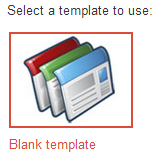
Choose a Blank template.
This is because you are going to embed only an iframe that points to
your website. Hence a good looking template for your Google site does
have no deal for you.
After choosing a blank template, enter a site name and click on "Create". Step 2:
Once your site is created, edit the home page.
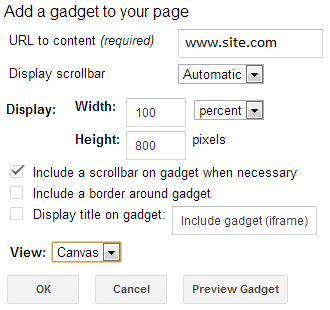
Go to Insert->More Gadgets and choose iframe widget as shown below.
Now enter your website url in the URL field.
Save the changes and test your newly created google site.
Step 3:
If you did the above two steps correctly you night see your website home page inside the newly created site.
Also note that header and footer of google site are visible.
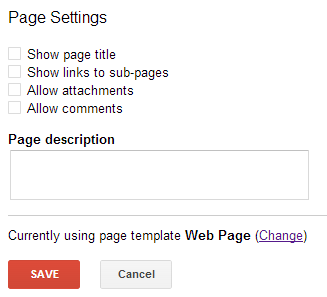
Press 'u' key, and the following dialog is displayed.
You can hide the header and footer easily. Just un-check all options as shown above. Step 4:
Create a new app for Facebook with your new Google website. Go to Facebook Developer Page.
In case You have been trying to download from Youtube For A very Long Time, Here Is an Application that will help you download video and extract music without any stress. it called YouTube Fisher is one of the Portable YouTube video downloader. It's an open source project.
I mentioned it is portable because:
Small in size (44 kB) only but yet rich in features.
In this blog post, I show you how to add TinyURL shorten-er widget for website or Blog. This widget will shorten any URL without any page load or registration / login. And it's free. And the best part is this widget is also available for Wordpress sites and blogger platform.
People who visit your site enters their long URL and gets their short URL instantly. No need to open any new tab, or browser window or any form for registration. ScreenShot:
President Goodluck Jonathan on Thursday
nominated the Corps Marshal of the Federal
Roads Safety Corps, Mr.
Osita Chidoka, as minister representing Anambra State on the Federal
Executive Council.
He also nominated a lecturer in the Department of Political Science
at the University of Abuja, Dr. Suleiman Olanrewaju Abubakar, as a
minister to represent Kwara State at the FEC.
Jonathan stated this in a letter addessed to the Senate President, David Mark, which was read at the plenary.
The President, in another letter, also asked the upper chamber to
approve the nomination of the current Acting Director-General of the
Nigerian Pension Commission, Mrs. Chinelo Anohu-Amaju, as the
substantive DG of the agency.
Investigations by our correspondent revealed that the nominees might be screened by the Senate on Wednesday next week.
Police in Pader district have arrested five people suspected to be promoting the act of homosexuality in the district.
The suspects were arrested in the period of one week after the tip
off by the locals, who accused the suspects of moving within the schools
in the district, promoting the practice which was early this year
criminalized by the Anti-homosexual Act 2014.
It’s alleged that the suspects have been carrying out clandestine
movements in both primary and secondary schools in the district luring
the pupils and students into the practice.
The OC Pader Central Police Station, Mr Romeo Ojara Onek, confirmed
the arrest, adding that police is still investigating the matter.
He said among the arrested suspects include two businessmen, one
teacher, and two students who are allegedly recruiting and promoting the
act.
“The suspects’ medical report is out and their files have been
forwarded to the Resident State Attorney for advice, pending
prosecution,” Mr Onek said.
Last year one of the teachers in the district reported a similar case to Pader district authorities.
This comes barely a month after the United States announced it had
cut aid to Uganda and cancelled a military exercise in response to the
Anti-homosexuality law that allegedly imposes harsh penalties on
homosexuality.
The new law, signed by President Yoweri Museveni in February this
year, imposes jail terms of up to life for “aggravated homosexuality”
which includes homosexual sex with a minor or while HIV-positive.
Widely condemned by donor countries, the law also criminalizes
lesbianism for the first time and makes it a crime to “help” individuals
engage in homosexual acts.
A Lagos-based human rights lawyer, Mr. Bamidele Aturu, is dead.
A source close to him said the vibrant legal mind died of high blood pressure on Wednesday. He was age 49.
Aturu, who was reportedly rushed to the
Lagos State University Teaching Hospital, Ikeja in the early hours of
Wednesday, was confirmed dead by medical personnel later in the day.
The late Aturu obtained a first degree in
Law from the Obafemi Awolowo University, Ile-Ife, Osun State. Until his
death, he was the Principal of Bamidele Aturu and Company in Lagos.
Commenting on the sad incident, a Lagos-based lawyer, Mr. Festus Keyamo, said he received the news as a shock.
“I just heard it but I am still trying to
confirm; I was told he died of high blood pressure-related ailment. It
is sad and I’m still in shock,” he said.
Another lawyer, Mr. Fred Agbaje said he was speechless.
Another legal luminary, Chief Anthony
Idigbe (SAN), who told one of our correspondents that he had yet to
confirm the death, said he wished it was not true.
Meanwhile, lawyers and rights activists have expressed shock over the death of the human rights lawyer.
A former Chairman of the Nigerian Bar
Association, Mr. Monday Ubani, who sounded too shocked to talk,
described Aturu as the best Nigerian, “whose activism was not targeted
at attracting public attention or government’s appointment.”
Others such as the Chairman, Coalition
Against Corrupt Leaders, Mr. Debo Adeniran, the National Coordinator,
Legal Defence and Assistance Project, Mr. Chino Obiagwu and the Chairman
of the Civil Society Network Against Corruption, Mr. Lanre Suraj,
simply said they were too shocked to comment on his death in separate
text messages to one of our correspondents on Wednesday.
A female patient in the US
has grown a nose on her back following a failed experimental stem cell
treatment that was intended to cure her paralysis. The nose-like growth,
which was producing a “thick mucus-like material,” has recently been
removed as it was pressing painfully on her spine. If you ever needed an
example of the potential perils of stem cell therapy, and just how
little we actually know about the function of stem cells, this is it.
It’s also notable that this stem cell therapy was carried out in a
developed country, as part of an approved trial (apparently unwanted
growths are more common in developing nations with less stringent
medical safeguards).
Eight years ago, olfactory stem cells were
taken from the patient’s nose and implanted in her spine. The stem cells
were meant to turn into nerve cells that would help repair the woman’s
spine, curing her of paralysis. Instead, it seems they decided to do
what they were originally meant to do and attempt to build a nose. Over a
number of years, the nose-like growth eventually became big enough and
nosy enough to cause pain and discomfort to the patient. As reported by New Scientist, “surgeons
removed a 3-centimetre-long growth, which was found to be mainly nasal
tissue, as well as bits of bone and tiny nerve branches that had not
connected with the spinal nerves.” [DOI: 10.3171/2014.5.SPINE13992 - "Autograft-derived spinal cord mass following olfactory mucosal cell transplantation in a spinal cord injury patient"]
As with any experimental
procedure, there is always a fairly good chance that something will go
wrong. In a 2010 clinical trial, 20 paralyzed patients were treated with
olfactory stem cells; 11 showed some signs of recovery, four had “minor
adverse events,” one developed meningitis, and in one case the
paralysis got worse. Jean Peduzzi-Nelson, a stem cell researcher, says
most patients undergoing the olfactory stem cell treatment have a
“remarkable recovery,” with “less than 1%” growing an unwanted snotty
appendage. [Read: Researchers create brain-computer interface that bypasses spinal cord injury paralysis.]
What went wrong, then? Basically, at the top of your nasal passages there is the olfactory mucosa.
This region contains all of the machinery for picking up odors, and the
neurons for sending all of that data off to your brain’s olfactory bulb
for processing. Cells from this region can be easily and safely
harvested, and with the correct processing they behave just like
pluripotent embryonic stem cells that can develop into many other cell
types. These olfactory stem cells could develop into cartilage, or mucus
glands, or neurons. The researchers obviously wanted the latter, to
cure the patient’s spinal nerve damage — but seemingly they got it
wrong, and thus she sprouted a second nose. Moving forward, newer
olfactory stem cell treatments have an “isolation” stage to prevent this
kind of thing from happening. [Read: The first 3D-printed human stem cells.]
It’s
important to note that medicine, despite being carried out primarily on
humans, is still ultimately a scientific endeavor that requires a large
amount of trial and error. In the western world, it’s very, very hard
to get a stem cell therapy approved for human trials without lots of
animal testing. Even then, the therapies are often only used on people
who have “nothing to lose.” Obviously it’s hard to stomach news like
this, and I’m sure that stem cell critics will be quick to decry the
Frankensteinian abomination created by these scientists. But when you
think about the alternative — no advanced medicine and significantly
reduced lifespans for billions of people — then really, such
experimental treatments are nothing to sneeze at.
After years of facing
criticism for its labor practices, Foxconn is working to solve the
problem. Will living conditions be completely revamped, and employees
paid fairly? Don’t be ridiculous! Instead, Foxconn wants to replace
those pesky workers with ten thousand robots. These robots alone could
manufacture hundreds of millions of iPhones every year — potentially
eliminating the need for most of the workforce. This rollout of
“Foxbots” might solve Foxconn’s current PR problem, but will it create a bigger uproar when thousands of workers lose their jobs to robots?
At
a shareholder’s meeting held recently, Foxconn’s Terry Gou explained
that these so-called “Foxbots” are almost ready for prime time. These
machines will be installed in at least one large-scale factory in the
near future, and we can most assuredly expect more to come once the
kinks have been worked out. Interestingly, Chinese site IT Home is
reporting that Apple — the company most associated with Foxconn — will
be the first company to use these new robots. If that’s true, maybe that rumored 4.7-inch iPhone 6 we’ve heard so much about will be assembled exclusively by robots.
Apparently, each of these
machines cost between $20,000 and $25,000, and they’ll be able to pump
out 30,000 units in a year’s time. After doing some back-of-the-envelope
calculations, it seems that 10,000 of these devices could churn out
over 820,000 devices in a single day. With numbers like that, it’s no
surprise that Foxconn is looking to automate its assembly line.
Of course, this doesn’t spell the immediate end of factory labor. In 2011, we were told that Foxconn would have upwards of a million robots in its factories
by 2014, but we’ve yet to see any official headcount. Since Foxconn
isn’t bragging about its total number of robots, it’s safe to assume
that those early estimates were overly optimistic. As it stands, Foxconn
employs well over a million people in factories all over the world, and
it’s just not practical to fire all of those people just yet. The human
touch is still needed in many aspects of production, but how long is
that going to last? The fields of robotics and artificial intelligence
are growing incredibly fast, and it seems inevitable that number of
factory jobs will slowly dwindle to nothing over the next few decades.
It’s
not all bad news, though. Robotic labor will most certainly reduce
cost, increase efficiency, and prevent exposure to unsafe working
conditions. Electronics will be even more affordable as robots take over
more jobs, and you won’t have to worry about supporting the sketchy labor practices found abroad. Unfortunately, that will likely come at the cost of millions of jobs across the entire industry.
First robots stole our jobs
here on Earth — and now Google and NASA want to do the same to our
astronauts. Later this week, Google and NASA will launch some Tango
smartphone-powered SPHERES robots to the International Space Station. As
their name suggests, SPHERES are spherical robots that will float
through the halls of the ISS, powered by small CO2 thrusters, performing
chores that would normally be carried out by astronauts. Tango,
Google’s sensor-laden prototype depth-sensing smartphone, will be the
brain of each robot. In the future, the SPHERES robots could even
perform risky tasks outside the ISS in the deep, dark, never-ending
expanse.
On July 11, an Orbital Sciences unmanned Cygnus spacecraft will
launch atop an Antares rocket. Orbital Sciences, like SpaceX, has a
commercial contract with NASA to ferry supplies to and from the ISS.
Cygnus, like SpaceX’s Dragon, will carry a bunch of goodies for the
astronauts aboard the ISS — including a handful of SPHERES.
In
true science-loves-backronyms-a-bit-too-much style, SPHERES stands
for Synchronized Position Hold, Engage, Reorient, Experimental
Satellites. As you can see in the photos throughout this story, each
robot is about the size of a bowling ball, with two protrusions for a
CO2 canister and the Tango smartphone.
NASA has sent SPHERES to the ISS before, but all they could really do
was move around with their small CO2 thruster. With the addition of a
Tango “brain” the hope is that the robots will actually be able to
assist astronauts on some tasks, or even completely carry out some
mundane chores, freeing up astronauts to work on other things.
In
recent years there has been a marked shift towards the use of
off-the-shelf hardware in space (and military) applications. This is
partly due to tighter budgets (a $1,000 digital camera is a damn sight
cheaper than the tens-of-thousands you would spend on a bespoke camera),
and partly because modern technology is just really darn good. “We
wanted to add communication, a camera, increase the processing
capability, accelerometers and other sensors [to the SPHERES]. As we
were scratching our heads thinking about what to do, we realized the
answer was in our hands,” Chris Provencher, SPHERES project manager told
Reuters. “Let’s just use smartphones.”
Initially NASA’s SPHERES team
just used normal smartphones from Best Buy, but they didn’t have the
necessary capabilities to move around smoothly and unaided. Now,
however, they’ve moved to Google’s Tango smartphone, which has a
Kinect-like sensor on the back that can quickly and accurately create a
3D map of its surroundings. Google and NASA have already tested the
smart, Tango-equipped SPHERES aboard a zero-g test flight — and now it’s
time to actually ship three of them up to the ISS.
As these early
SPHERES aren’t equipped with tools, they will mostly just fly around
the ISS, testing out their software. The eventual goal is to have a
fleet of bowling ball robots flying around in formation, fixing things,
docking to things (and moving them around), and autonomously looking for
things (a mislaid spanner, lost satellites, etc.) This would free up
astronauts to do other, more important things — and if SPHERES can also
perform EVAs (extra-vehicular activity, space walks), then the risk of
being an astronaut would be significantly reduced.


 A lot of students
struggle year in year out to pass Jamb exams. The mention of the word JAMB
alone gives some students the jitters because they believe that it’s an
examination that is difficult, if not completely impossible to pass by the
average student.Some students who
eventually manage to pass JAMB have to struggle with another round of
qualifying examinations – POST UTME, before they can now fully gain admission
into universities or polytechnics of their choice.
A lot of students
struggle year in year out to pass Jamb exams. The mention of the word JAMB
alone gives some students the jitters because they believe that it’s an
examination that is difficult, if not completely impossible to pass by the
average student.Some students who
eventually manage to pass JAMB have to struggle with another round of
qualifying examinations – POST UTME, before they can now fully gain admission
into universities or polytechnics of their choice.